European trailer manufacturers unite in Lier: 30 CEOs sign petition for review of CO₂ Regulation (EU) 2024/1610
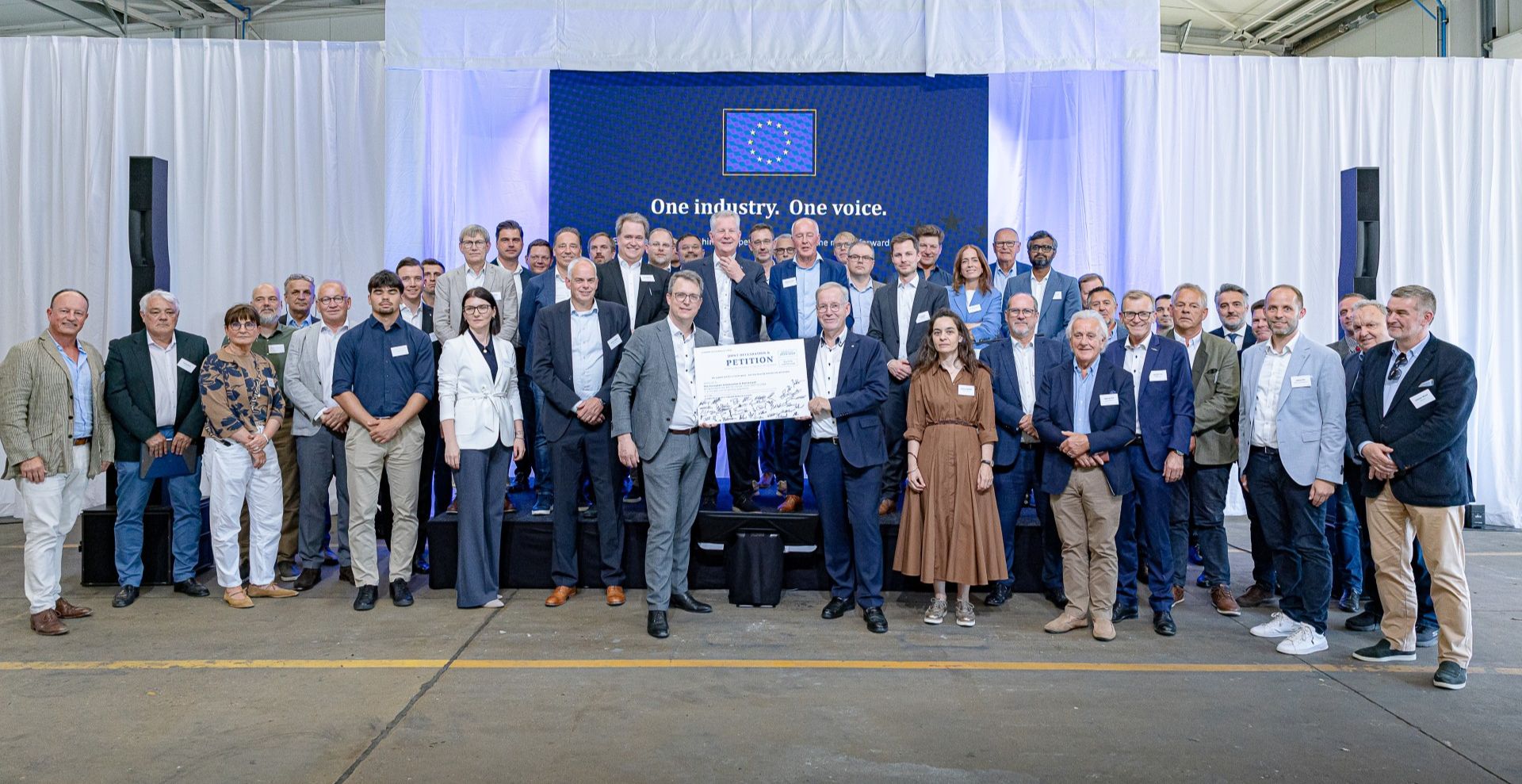
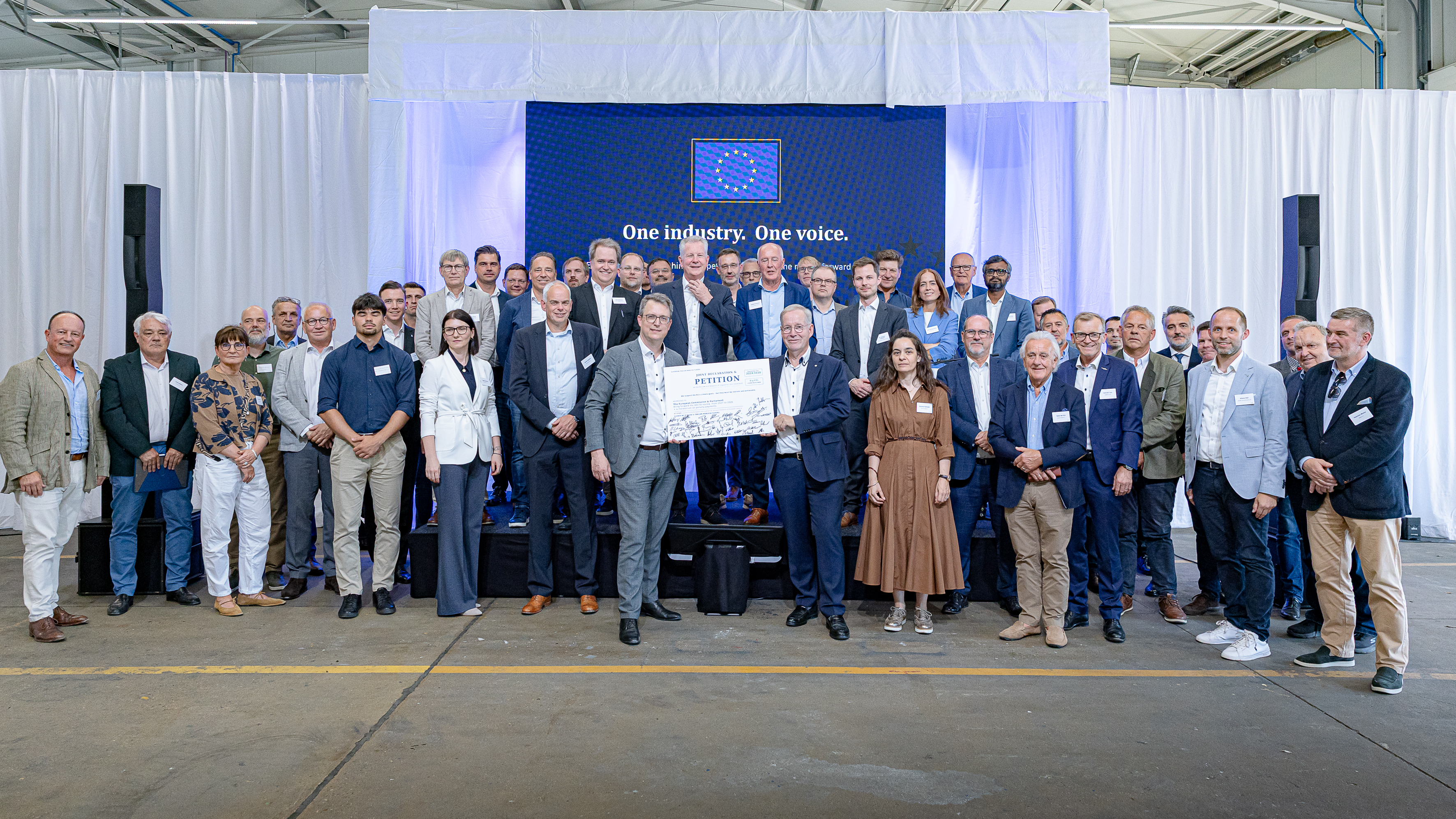
Koningshooikt (Lier), Belgium — 6 July 2026. The CEOs of 30 leading European trailer manufacturers met in Koningshooikt last week near Lier and signed a joint declaration and petition in the presence of the two Members of the European Parliament Kris Van Dijck (Belgium) and Jens Gieseke (Germany). They call on the European Commission and the European Parliament to review and adjust Regulation (EU) 2024/1610. Companies that normally compete for the same customers and contracts spoke with one voice: they support the EU’s climate targets, but warn that the rules as designed could increase CO₂ emissions rather than cut them.
The problem
Regulation (EU) 2024/1610 extends CO₂ standards to trailers, even though trailers emit no CO₂ directly. Manufacturers are held responsible for simulated emissions calculated by the VECTO tool, which relies on standardized reference loads and duty cycles. The signatories argue this methodology does not reflect the operational realities of European road transport: the diversity of trailer applications, real payload and loading requirements, or the rapid rise of zero-emission tractor units.
Their central warning is that, to meet the targets, manufacturers could be pushed toward design changes that reduce usable loading capacity. The result would be more trips, more empty runs, and more vehicles on the road to move the same volume of goods — and therefore more CO₂, not less. From 2030, an exceedance premium of €4,250 per gCO₂/tkm above target, multiplied by each registered vehicle, would expose manufacturers to annual penalties in the millions. Around 70,000 jobs across Europe depend on an economically viable trailer industry.
What the signatories demand
The petition sets out five requests:
1. Bring the Article 15 review forward from 2027 to 2026. Publish the reference values immediately after monitoring and lower the fleet targets to achievable levels, for example 5 percent from 2030, phased in.
2. Phase in the fleet targets from 1 July 2030 to avoid market distortions and foreseeable job losses.
3. Introduce a moratorium on penalties and adjust the penalty level, which is out of all proportion to the market price of the vehicles.
4. Overhaul the VECTO tool for trailers so vehicles with comparable purpose are compared fairly and the growing share of zero-emission tractors is taken into account. Targets and levies should fall in line with the market penetration of zero-emission tractors and disappear entirely once these reach a 70 percent market share.
5. Recognize that the planned credit-and-debit system is largely ineffective within the current timeframe, because the necessary trailer technologies cannot reach the market at scale fast enough.
Quotes
“Decarbonization must not become deindustrialization. The answer is not to abandon climate ambition. It is to make sure our policies are based on reality, on technology that exists, and on outcomes that can actually be achieved. That is why I support a serious review of the current methodology, not because we want weaker rules, but because we want rules that reduce emissions and strengthen European industry,” said MEP Kris Van Dijck.
“European industry cannot be told to lead the green transition while we make it impossible to compete. The trailer sector is ready to deliver, but the targets have to be technically achievable. We need an evidence-based review now, in 2026 — not in 2027, when the damage may already be done,” said MEP Jens Gieseke.
“Today thirty competitors put their rivalry aside to send Brussels a single message. We are not asking for less climate protection. We are asking for rules that cut emissions instead of penalizing manufacturers for a flawed simulation. The Article 15 review must be brought forward — every month of delay costs investment, jobs, and credibility,” said Gero Schulze Isfort, spokesman for the German coalition of eight leading European trailer manufacturers.
Signatories
The joint declaration and petition were signed by the CEOs of 30 European trailer manufacturers.
Attachments
— The signed petition.
— A group photograph of the signatories taken in Lier.
Press contact for the coalition of eight German manufacturers
Dr. Karin Funke-Rapp
GloNet Communications
karin@funke-rapp.com
Phone: +49 176 627 55085
Acerca de Schmitz Cargobull
Schmitz Cargobull es el fabricante líder de semirremolques para carga con temperatura controlada, carga general y mercancías a granel en Europa y pionero en soluciones digitales para servicios del remolque y conectividad. La compañía también fabrica equipos de frío para semirremolques frigoríficos. Con una amplia gama de servicios que van desde financiación, suministro de repuestos, contratos de servicio y soluciones telemáticas hasta el comercio de vehículos usados, Schmitz Cargobull ayuda a sus clientes a optimizar su coste total de propiedad (TCO) y su transformación digital. Schmitz Cargobull se fundó en 1892 en Renania del Norte-Westfalia, Alemania. La empresa familiar produce alrededor de 50.000 vehículos al año con más de 6.000 empleados y generó una facturación de alrededor de 2.25 millones de euros en el ejercicio 2025/26. La red de producción internacional se compone actualmente plantas en Alemania, Lituania, España, Reino Unido, Turquía y Rumanía.
El equipo de prensa de Schmitz Cargobull:
Raquel Villarroya: +34 619 154 244 I raquel.villarroya@cargobull.com
Anna Stuhlmeier: +49 2558 81-1340 I anna.stuhlmeier@cargobull.com
Andrea Beckonert: +49 2558 81-1321 I andrea.beckonert@cargobull.com
Download
-
Press Release: European trailer manufacturers unite in Lier: 30 CEOs sign petition for review of CO₂ Regulation (EU) 2024/1610
-
Image: 30 European trailer manufacturers signed a joint petition to review the VECTO methodology for trailers
-
PDF: Petition