Os fabricantes europeus de semirreboques unem-se em Lier: 30 diretores-executivos assinam petição para rever o Regulamento CO₂ (UE) 2024/1610
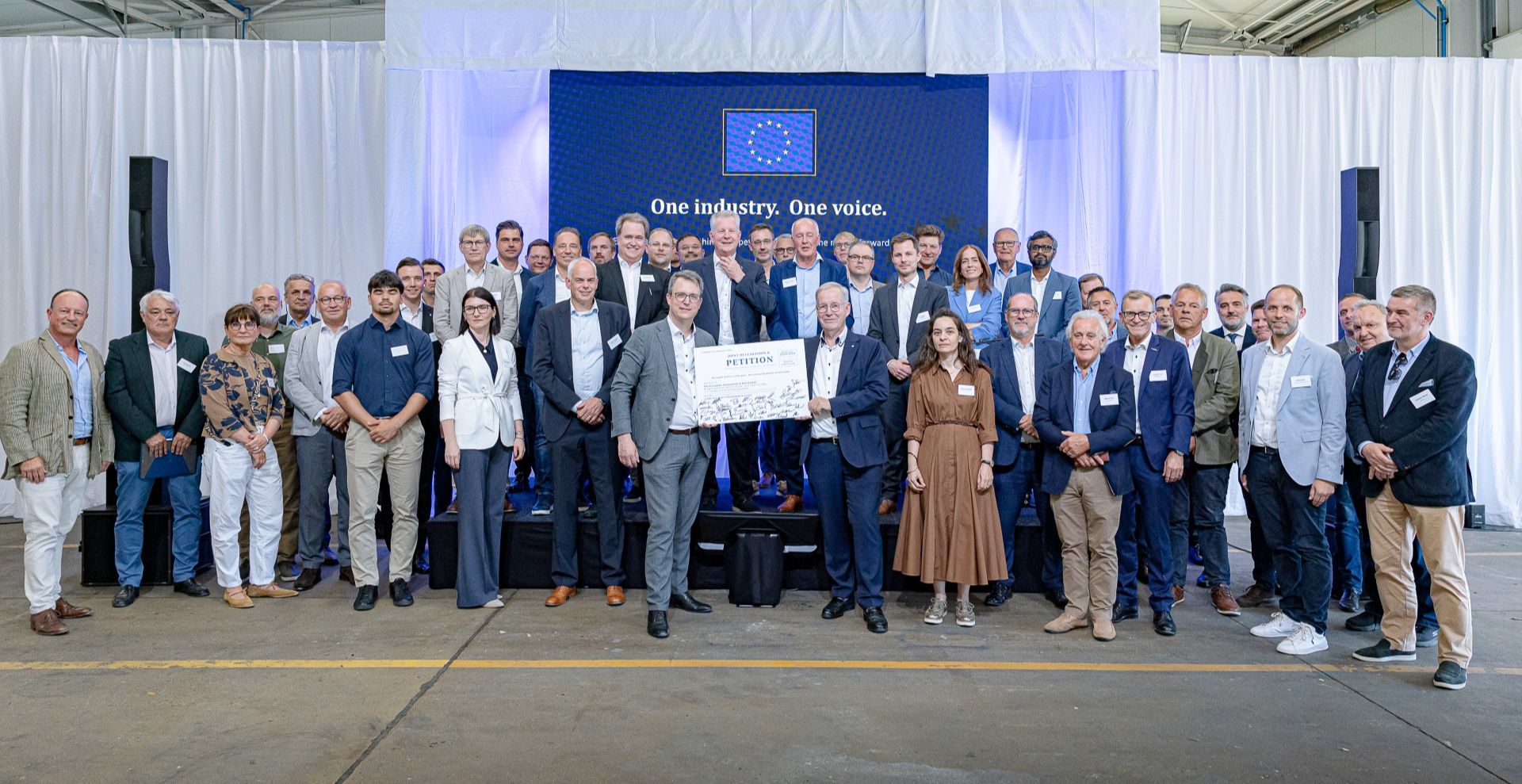
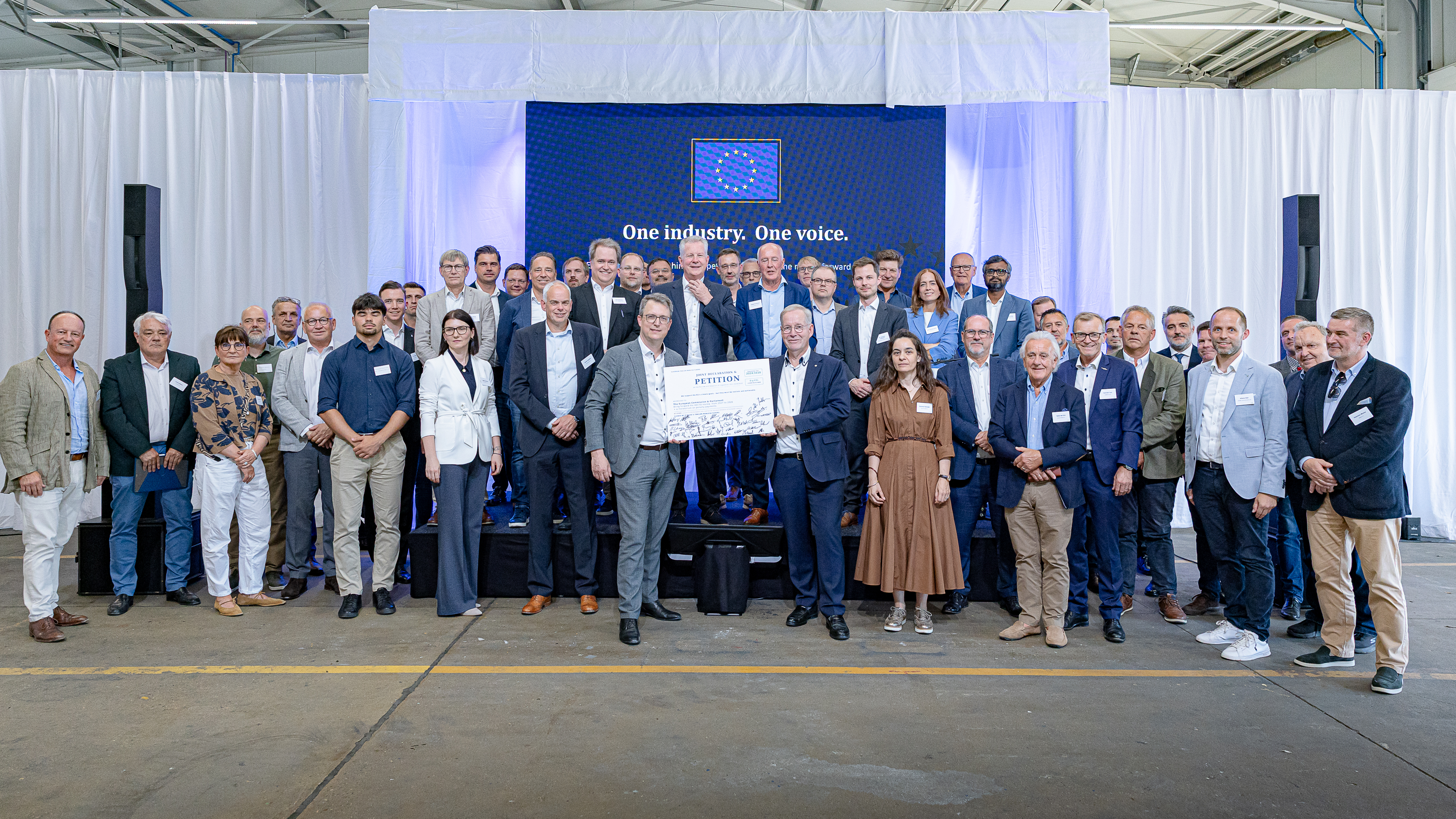
Koningshooikt (Lier), Bélgica, 6 de julho de 2026 – Os CEO de 30 dos principais fabricantes europeus de semirreboques reuniram-se na semana passada em Koningshooikt, perto de Lier, e assinaram uma declaração conjunta e uma petição na presença dos deputados ao Parlamento Europeu Kris Van Dijck (Bélgica) e Jens Gieseke (Alemanha). Os signatários apelam à Comissão Europeia e ao Parlamento Europeu para que revejam e ajustem o Regulamento (UE) 2024/1610. Empresas que normalmente concorrem entre si pelos mesmos clientes e contratos uniram-se para transmitir uma mensagem comum: apoiam os objetivos climáticos da União Europeia, mas alertam que as regras, na sua forma atual, poderão aumentar as emissões de CO₂ em vez de as reduzir.
O problema
O Regulamento (UE) 2024/1610 alarga as normas relativas às emissões de CO₂ aos semirreboques, apesar de estes não produzirem emissões de CO₂ diretamente. Os fabricantes são responsabilizados por emissões simuladas, calculadas através da ferramenta VECTO, que se baseia em cargas de referência e ciclos de utilização normalizados. Segundo os signatários, esta metodologia não reflete a realidade operacional do transporte rodoviário europeu, nomeadamente a diversidade de aplicações dos semirreboques, os requisitos reais de carga e transporte, nem a crescente adoção de veículos tratores com emissões zero.
O principal alerta é que, para cumprir os objetivos definidos, os fabricantes poderão ser obrigados a introduzir alterações de conceção que reduzem a capacidade de carga útil dos veículos. Como consequência, seriam necessárias mais viagens, mais percursos em vazio e mais veículos para transportar o mesmo volume de mercadorias, o que poderia levar ao aumento das emissões de CO₂ em vez da sua redução. A partir de 2030, uma penalização por excesso de emissões de 4.250 euros por gCO₂/tkm acima do objetivo, multiplicada por cada veículo matriculado, poderá expor os fabricantes a multas anuais na ordem dos milhões de euros. Cerca de 70.000 postos de trabalho na Europa dependem de uma indústria de semirreboques economicamente sustentável.
As reivindicações dos signatários
A petição apresenta cinco pedidos:
1. Antecipar para 2026 a revisão prevista no Artigo 15, inicialmente marcada para 2027. Publicar imediatamente os valores de referência após a monitorização e reduzir os objetivos de frota para níveis exequíveis, por exemplo para 5% a partir de 2030, com implementação gradual.
2. Introduzir progressivamente os objetivos de frota a partir de 1 de julho de 2030, de forma a evitar distorções de mercado e perdas de emprego previsíveis.
3. Aplicar uma moratória às coimas e rever o seu montante, atualmente considerado desproporcionado face ao valor de mercado dos veículos.
4. Reformar o sistema VECTO para os semirreboques, garantindo que veículos com funções comparáveis sejam avaliados de forma justa e que seja considerada a crescente quota de mercado dos veículos tratores de emissões zero. Os objetivos e encargos deveriam ser ajustados à penetração destes veículos no mercado e eliminados por completo quando atingirem uma quota de mercado de 70%.
5. Reconhecer que o sistema de créditos e débitos previsto é, em grande medida, ineficaz dentro dos prazos atuais, uma vez que as tecnologias necessárias para os semirreboques não poderão alcançar uma penetração de mercado suficiente num período tão curto.
Declarações
“A descarbonização não se pode transformar em desindustrialização. A resposta não passa por abdicar das ambições climáticas. Em vez disso, devemos garantir que as políticas assentam na realidade, em tecnologias efetivamente disponíveis e em resultados concretamente alcançáveis. É por isso que apoio uma revisão séria da metodologia atual, não porque pretendamos regras menos exigentes, mas porque queremos regras que reduzam as emissões e reforcem a indústria europeia.” Kris Van Dijck, deputado ao Parlamento Europeu
“Não podemos pedir à indústria europeia que lidere a transição ecológica e, simultaneamente, tornar impossível a sua capacidade de competir. O setor dos semirreboques está preparado para desempenhar o seu papel, mas os objetivos têm de ser tecnicamente alcançáveis. É necessária uma revisão baseada em evidências concretas já em 2026, e não em 2027, quando os danos poderão já estar consumados.” Jens Gieseke, deputado ao Parlamento Europeu
“Hoje, trinta concorrentes colocaram de lado a rivalidade para enviar uma mensagem única a Bruxelas. Não estamos a pedir menos proteção climática. Estamos a pedir regras que reduzam efetivamente as emissões, em vez de penalizarem os fabricantes com base numa simulação imperfeita. A revisão prevista no Artigo 15 deve ser antecipada. Cada mês de atraso representa perdas de investimento, de postos de trabalho e de credibilidade.” Gero Schulze Isfort, porta-voz da coligação alemã composta por oito dos principais fabricantes europeus de semirreboques.
Signatários
A declaração conjunta e a petição foram assinadas pelos CEO de 30 fabricantes europeus de semirreboques.
Anexos
— Petição assinada.
— Fotografia de grupo dos signatários, tirada em Lier.
Contacto para a imprensa da coligação dos oito fabricantes alemães
Dr. Karin Funke-Rapp
GloNet Communications
E-mail: karin@funke-rapp.com
Tel.: +49 176 627 55085
About Schmitz Cargobull
Schmitz Cargobull is the leading manufacturer of semi-trailers for temperature-controlled freight, general cargo and bulk goods in Europe, and a pioneer in digital solutions for trailer services and improved connectivity. The company also manufactures transport cooling units for refrigerated box body semi-trailers for temperature-controlled freight transport. With a comprehensive range of services from financing, spare parts supply, service contracts and telematics solutions to used vehicle trading, Schmitz Cargobull supports its customers in optimising their total cost of ownership (TCO) and digital transformation.
Schmitz Cargobull was founded in 1892 in North Rhine-Westphalia, Germany. The family-run company produces around 50,000 vehicles per year with over 6,000 employees and generated a turnover of around €2.25 billion in the financial year 2025/26. Its international production network is made up of factories in Germany, Lithuania, Spain, Turkey, Romania and the UK.
The Schmitz Cargobull press team:
| Anna Stuhlmeier: | +49 2558 81-1340 I anna.stuhlmeier@cargobull.com |
| Andrea Beckonert: | +49 2558 81-1321 I andrea.beckonert@cargobull.com |
| Silke Hesener: | +49 2558 81-1501 I silke.hesener@cargobull.com |
Download
-
Press Release: European trailer manufacturers unite in Lier: 30 CEOs sign petition for review of CO₂ Regulation (EU) 2024/1610
-
Image: 30 European trailer manufacturers signed a joint petition to review the VECTO methodology for trailers
-
PDF: Petition